Circular Change
Types
Topics
Description
Thesis, Brand, Print, & Generative Design
Circular Economy, Sustainable Design, Biomimicry, Regenerative Design
Historically, design has been a main contributor to a linear economy: a model that generates value by brands producing and making as much product as possible in the shortest amount of time. Circular Change is a graphic design thesis project that shifts to the circular economy: a model rooted in sustainability focused on using waste as forms of nutrients. The thesis applies circular principles to propose new forms of messaging in order to shift modern consumer mindsets.
My first thesis semester, Fall 2020, was spent researching and documenting key findings into a Process Book. The text was formatted in a way that mimic'd the structure of my Circular Change logo as each paragraph break shifted columns. The imagery and pull quotes throughout the book were generatively mediated to reinforce the concept of regenerative systems.

Click here to read the Circular Change Thesis.


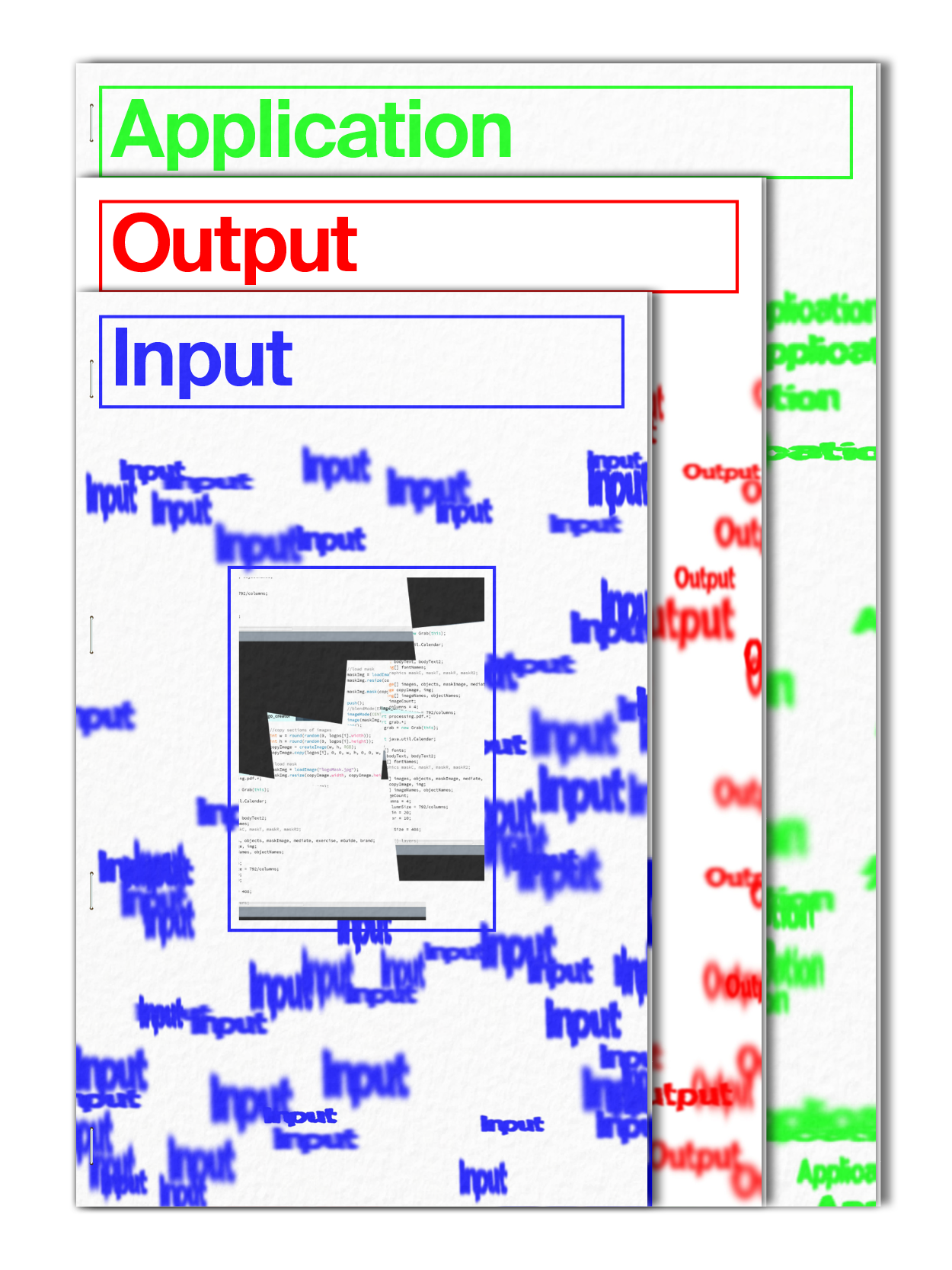
Based on my research on the circular model, I created generative design tools using Processing to apply circular principles in a graphic design context. The tools were first tested on imagery I used throughout my Process Book spreads.


Current logo structures were broken down and rearranged to form new marks. The main circular concept of reusing materials to eliminate waste laid the foundation for the collaged visual language.


The tools were then extended to a select group of users to generate their own output based on a creative brief to address specific issues. The user could only use materials that have already been created, thus reinforcing the circular principle of reusing materials to create a new product.


Through the generative design experiments, a reimagined consulting design agency was created: Circular Change Collective. Its focus is to help shift mindsets and behaviors of consumers through the application of the circular economic model. Each branding project uses materials and visual elements that already exist within a brand to create regenerative systems of design. The two touch points for the Collective are a centralized website with all documented design consulting projects, and a three-section pamphlet to show the agency's repurposed design process.


Circular Change
Description
Historically, design has been a main contributor to a linear economy: a model that generates value by brands producing and making as much product as possible in the shortest amount of time. Circular Change is a graphic design thesis project that shifts to the circular economy: a model rooted in sustainability focused on using waste as forms of nutrients. The thesis applies circular principles to propose new forms of messaging in order to shift modern consumer mindsets.
Types
Topics
Thesis, Brand, Print, & Generative Design
Circular Economy, Sustainable Design, Biomimicry, Regenerative Design
My first thesis semester, Fall 2020, was spent researching and documenting key findings into a Process Book. The text was formatted in a way that mimic'd the structure of my Circular Change logo as each paragraph break shifted columns. The imagery and pull quotes throughout the book were generatively mediated to reinforce the concept of regenerative systems.

Click here to read the Circular Change Thesis.


Based on my research on the circular model, I created generative design tools using Processing to apply circular principles in a graphic design context. The tools were first tested on imagery I used throughout my Process Book spreads.


Current logo structures were broken down and rearranged to form new marks. The main circular concept of reusing materials to eliminate waste laid the foundation for the collaged visual language.


The tools were then extended to a select group of users to generate their own output based on a creative brief to address specific issues. The user could only use materials that have already been created, thus reinforcing the circular principle of reusing materials to create a new product.


Through the generative design experiments, a reimagined consulting design agency was created: Circular Change Collective. Its focus is to help shift mindsets and behaviors of consumers through the application of the circular economic model. Each branding project uses materials and visual elements that already exist within a brand to create regenerative systems of design. The two touch points for the Collective are a centralized website with all documented design consulting projects, and a three-section pamphlet to show the agency's repurposed design process.